

Lark in the Morning
Carved Ngoma Drum
Carved Ngoma Drum
SKU:DRU741
Couldn't load pickup availability
Carved Ngoma from Mali. At over three and a half feet tall with an 11-inch head, it has real presence, and the moment you strike it you understand why the original listing simply said "big booming sound." If you're after a drum with genuine African craftsmanship and a voice that fills a room, this one is hard to overlook.
Construction & Materials
The drum features a hand-carved wooden body finished in a warm reddish-brown tone, with traditional geometric relief carvings adorning the mid-section column — diamond crosshatch patterns surrounding an oval medallion motif. The upper drum body is wrapped in vertical rope lacing using black and red braided cord, anchoring the natural animal skin head securely to the shell. The base is finished in a dark charcoal tone and features a splayed footed design that provides stable, ground-level support. Head diameter measures 11 inches and overall height is 43 inches. It weighs 39 lbs. Shipping cost is fixed at $100.
Sound & Playability
The ngoma's tall, cylindrical resonating chamber produces a deep, resonant bass tone with strong projection — the kind of low-end thump that carries across an outdoor gathering or anchors a drum circle. The rope tension system allows for tuning adjustments as the head settles and responds to changes in humidity. The drum plays best when performed in an upright standing position, struck with open palms or fingers near the center and edge of the head to access its tonal range from full bass to brighter overtones. See the video for a sound sample, though unfortunately it doesn't capture the full bass.
About This Instrument
Ngoma drums are among the most widely distributed percussion instruments across sub-Saharan Africa, used in ceremonial, communal, and celebratory contexts throughout East, Central, and Southern Africa. The word "ngoma" itself means both drum and music in several Bantu languages, reflecting how central these instruments are to community life and cultural identity. This example follows traditional construction principles with its rope-laced skin head and carved wooden body, making it both a functional percussion instrument and a piece of artisan craftsmanship rooted in a living musical tradition.
Care & Maintenance
Store the drum away from direct sunlight and extreme temperature changes to protect both the wooden body and the natural skin head. Avoid exposing the head to moisture or prolonged humidity, which can loosen tension and affect tone. If the head becomes slack in cool or damp conditions, gentle warming near a heat source can help restore tension. Periodically inspect the rope lacing for wear and re-tie any loose knots to maintain even tension across the head. Apply a natural wood conditioner to the carved body occasionally to preserve the finish and prevent cracking.


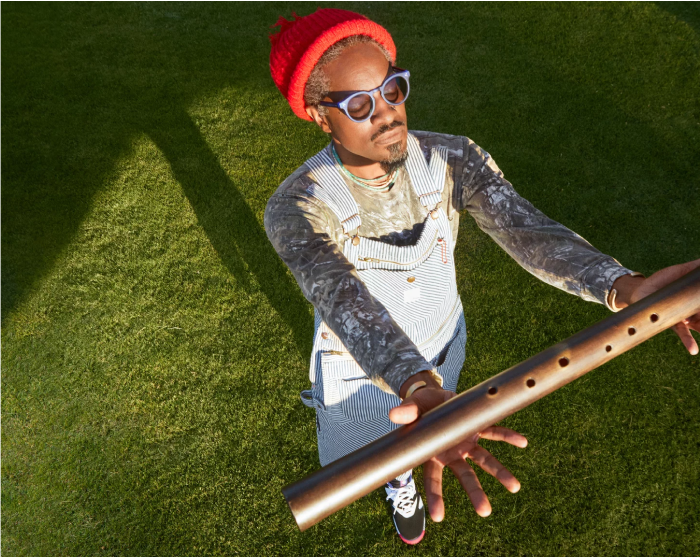
Look Out For Our Unique Instruments In Andre 3000's New Album
Andre 3000 found inspiration in our one-of-a-kind instruments to create the groundbreaking sounds of his newest album.
- Choosing a selection results in a full page refresh.
- Opens in a new window.