

Gibson
Gibson H2 Mandola, c. 1913
Gibson H2 Mandola, c. 1913
SKU:MAN176
Couldn't load pickup availability
This early 20th-century Gibson H2 Mandola is the kind of instrument that stops you mid-strum and makes you think about all the parlors, stages, and front porches it must have seen in its 110-plus years. The deep black finish, the ornate fleur-de-lis headstock inlay, and that gorgeous gold oval soundhole decoration give it a presence that feels regal without being fussy. It plays and sounds every bit as good as it looks, which for a mandola pushing 112 years old is genuinely remarkable.
Construction & Materials
The Gibson H2 Mandola is built in Gibson's classic early-era A-style teardrop body form, featuring a round soundhole adorned with an elaborate gold rope-style decorative ring. The body is finished in a deep, lustrous black lacquer with warm sunburst shading visible along the lower bout edges, giving depth and visual richness to the overall presentation. Cream and gold body binding runs along the top edge, adding a refined accent that was characteristic of Gibson's craftsmanship in the early 1910s. The headstock displays the iconic "The Gibson" script in gold lettering alongside an ornate fleur-de-lis inlay, consistent with period instruments of this model. The tailpiece is a period-correct engraved metal plate also bearing the "The Gibson" name. The dark fretboard features dot position markers and accommodates approximately 17 frets, with a slim, comfortable neck profile typical of the era. Eight tuning machines with metal buttons are arranged four-per-side on the scroll-style headstock.
Sound & Playability
A century-old Gibson mandola tuned in fifths (C-G-D-A, a fifth below a standard mandolin) delivers a warm, woody tone with a singing midrange that modern instruments often struggle to replicate. The larger body compared to a mandolin gives the H2 a fuller, more resonant voice that sits beautifully in ensemble playing or shines in solo acoustic settings. The original seller confirms this instrument still plays and sounds great, a testament to Gibson's early build quality and the care this instrument has received over its long life. It is well suited for Celtic, classical, bluegrass, and acoustic folk contexts where that vintage tonal character is especially prized.
About This Instrument
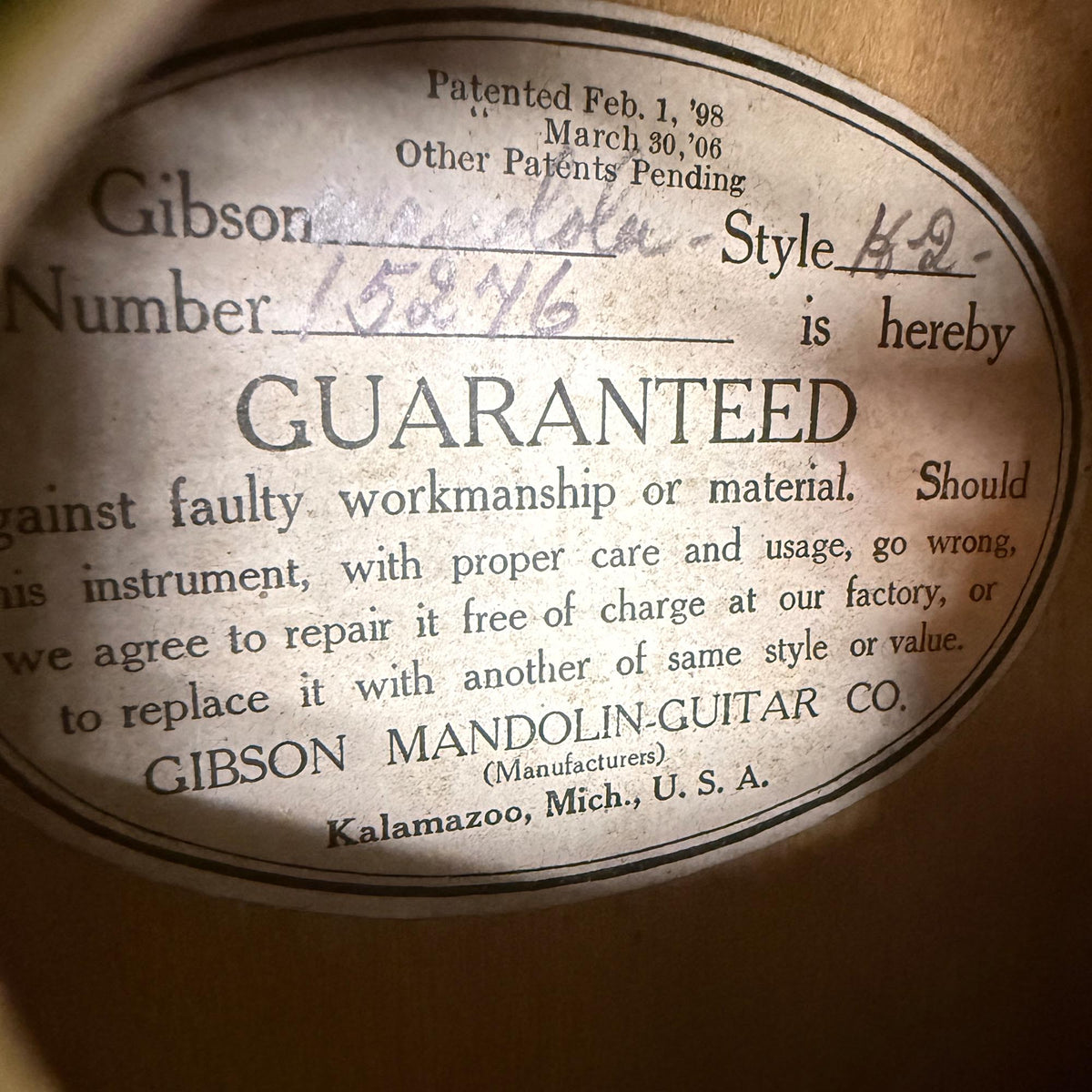
This example carries serial number 15246 (possibly 15276), placing production at approximately 1913 during Gibson's formative Kalamazoo-era period, before the company became the corporate giant it is today. The H2 was Gibson's mid-tier mandola model, positioned above the H1 and below the ornate H4, and relatively few survive in playable condition after more than a century. This is a consignment instrument offered in very good condition with its original case included, making it a compelling find for vintage instrument collectors, serious mandolin family players, and anyone with an appreciation for American lutherie history.
Care & Maintenance
As with any vintage instrument of this age, thoughtful care will preserve both playability and value. Store the mandola in its included original case away from extreme temperatures and humidity fluctuations, which can stress aged tonewoods and vintage lacquer finishes. Use a soft, dry cloth to wipe down strings and the body after playing. Periodic inspection by a qualified luthier familiar with pre-war Gibson instruments is recommended, particularly for neck set, fret condition, and bridge fit. Avoid harsh chemical cleaners on the vintage finish.



Look Out For Our Unique Instruments In Andre 3000's New Album
Andre 3000 found inspiration in our one-of-a-kind instruments to create the groundbreaking sounds of his newest album.
- Choosing a selection results in a full page refresh.
- Opens in a new window.